Current Prices of Shillings by Type and Condition
How much is a shilling worth today? Price ranges for shillings in 2026 follow consistent and strict grading tiers.
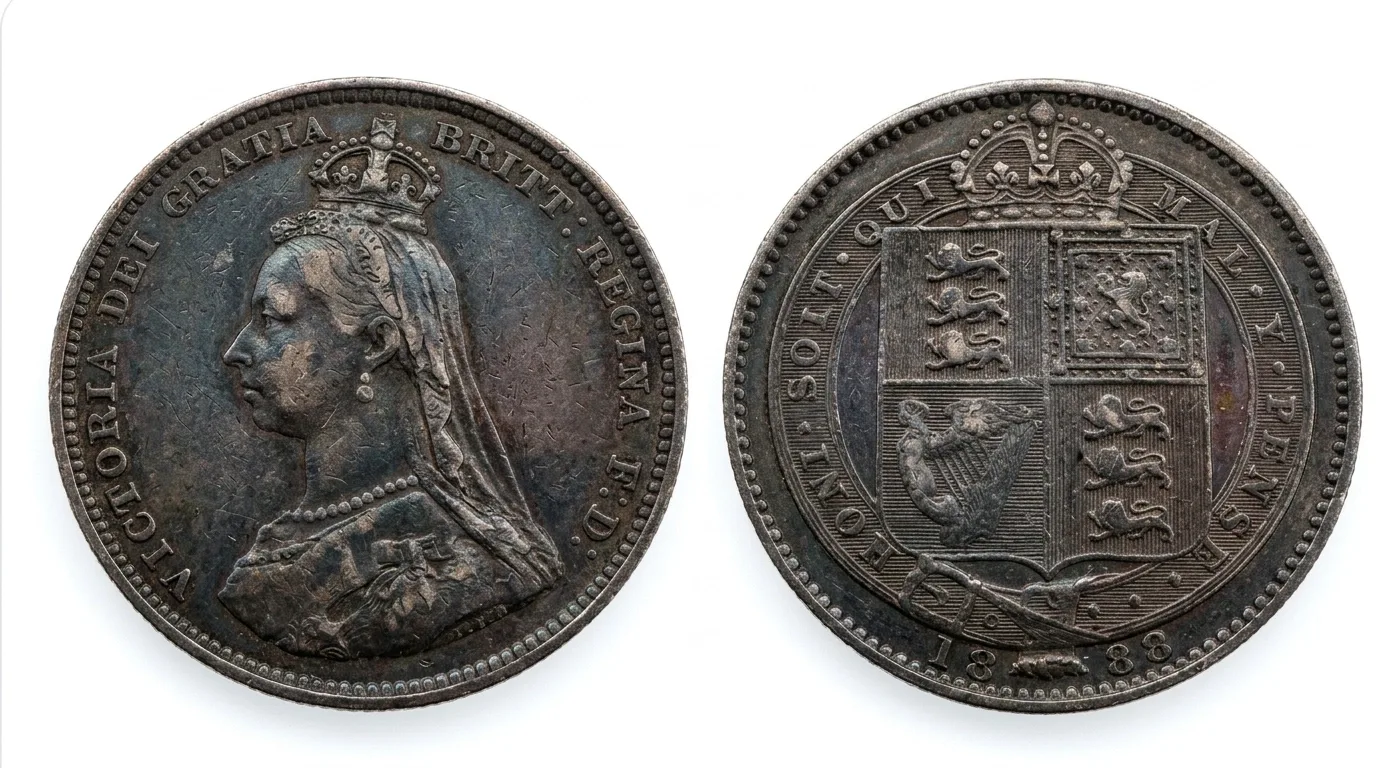
Market value for every coin is defined by its mintage numbers and physical surface state.
Professional traders rely on finished auction deals rather than subjective guesses.
Silver-based shillings show a direct link to global metal markets, while copper-nickel items are valued purely on their rarity.
Minting Period | XF Grade | MS63 Grade | MS65 Grade |
Victorian Era (1838–1901) | $45 | $210 | $550 |
Edward VII Era (1902–1910) | $35 | $180 | $480 |
Early George V (1911–1919) | $20 | $95 | $290 |
Late George V (1920–1936) | $12 | $65 | $150 |
Choosing an XF grade implies the design remains sharp despite light wear on high points.
Hitting an MS65 grade requires a total absence of visible scratches and a full factory luster.
Technical Specs and Material Build
Accurate identification requires a double-check of the coin mass and purity.
Shifting away from standard weights suggests either heavy wear or a counterfeit.
Imperial Shilling Standards:
92.5% Silver (Until 1919) → Mass: 5.65 grams.
50% Silver (1920–1946) → Mass: 5.65 grams.
Copper-Nickel Mix (Post-1947) → Mass: 5.65 grams.
Switching to 50% silver in 1920 helped the UK cover debts following the Great War.
Post-1947 coins use a mix of 75% Copper and 25% Nickel.
Australian Shilling Value Analysis (1910–1963)
High demand for Australian shillings stems from low mintage years in the mid-20th century.
Australia's market in 2026 shows a 6% yearly increase for key dates.
Value Drivers:
1915 Shilling (London Mint) → $1,200 in MS state.
1921 Shilling (Star above date) → $850 in MS state.
1933 Shilling → $3,500 in MS state.
Rarity Logic → Low 1933 mintage → Massive 2026 demand → 120% price rise over ten years.
Standard weight for the Australian shilling matches the UK benchmark of 5.65 grams.
East African and Colonial Shilling Markets
Colonial issues often trade higher than UK versions due to harsh circulation conditions.
Humid African climates caused rapid paper and metal damage, making perfect coins rare.
Territory | Rare Date | XF Price | MS Price |
East Africa | 1921 | $25 | $110 |
New Zealand | 1933 | $40 | $200 |
Southern Rhodesia | 1932 | $70 | $350 |
Using 80% silver in the 1921 East African run results in a 5.65-gram mass.
Moving to the copper-nickel build in 1948 did not change the 5.65-gram weight standard.
Grading Impact on Final Sale Prices
Certification through independent labs is mandatory for any high-value lot.
Selling a coin in a plastic holder with a verified grade boosts its market liquidity.
Sheldon Scale Breakdown:
Grades 1-20 → Circulated coins; value is close to the raw metal price.
Grades 25-58 → Collectible items showing visible wear.
Grades 60-70 → Mint State items never used in commerce.
Trading a coin without a grade in 2026 leads to a 20-30% discount from the market rate.
Upgrading a George VI shilling to MS67 can lift its price from $10 to $150.
Record-Breaking Auction Sales
Data from 2024-2025 highlights the most expensive items in the shilling category.
Pricing proves that rare shillings serve as a serious investment tool in 2026.
Top Sale List:
Charles I Shilling (Bristol Mint, 1644) → $9,500.
Oliver Cromwell Shilling (1658) → $14,000.
Queen Anne Shilling (Vigo, 1703) → $7,800.
Value for the 1658 Cromwell shilling grew by 15% over the last two years.
Famous Vigo issues reached high prices because they used silver captured from Spanish ships.
Minting Errors and Market Premiums
Coins featuring factory glitches form a unique market segment and can be determined with the coin checker app.
Investors in 2026 hunt for these errors to find one-of-a-kind assets.
Error Types and Prices: → 15% Off-center strike → $120. → Double Die strike → $250. → Struck on a 6-pence blank → $900.
Striking on a 6-pence blank results in a weight of 2.83 grams instead of 5.65 grams.
Every such error must come with a certificate of authenticity to hold its value.
Irish Shilling Economics (1928–1968)
Irish coins stand out due to their animal-themed designs featuring a bull.
Ireland's numismatic market remains stable with a 3% annual growth rate.
Specs and Pricing:
75% Silver (1928–1943) → Mass: 5.65 grams.
Copper-Nickel (1951–1968) → Mass: 5.65 grams.
1928 Date (MS grade) → $85.
1937 Date (MS grade) → $450.
Short production in 1937 makes this year the key date for the Irish series.
Using 75% silver provides the best balance between durability and shine.
Assessing Design Sharpness
Professional inspection starts with the highest points of the coin's design.
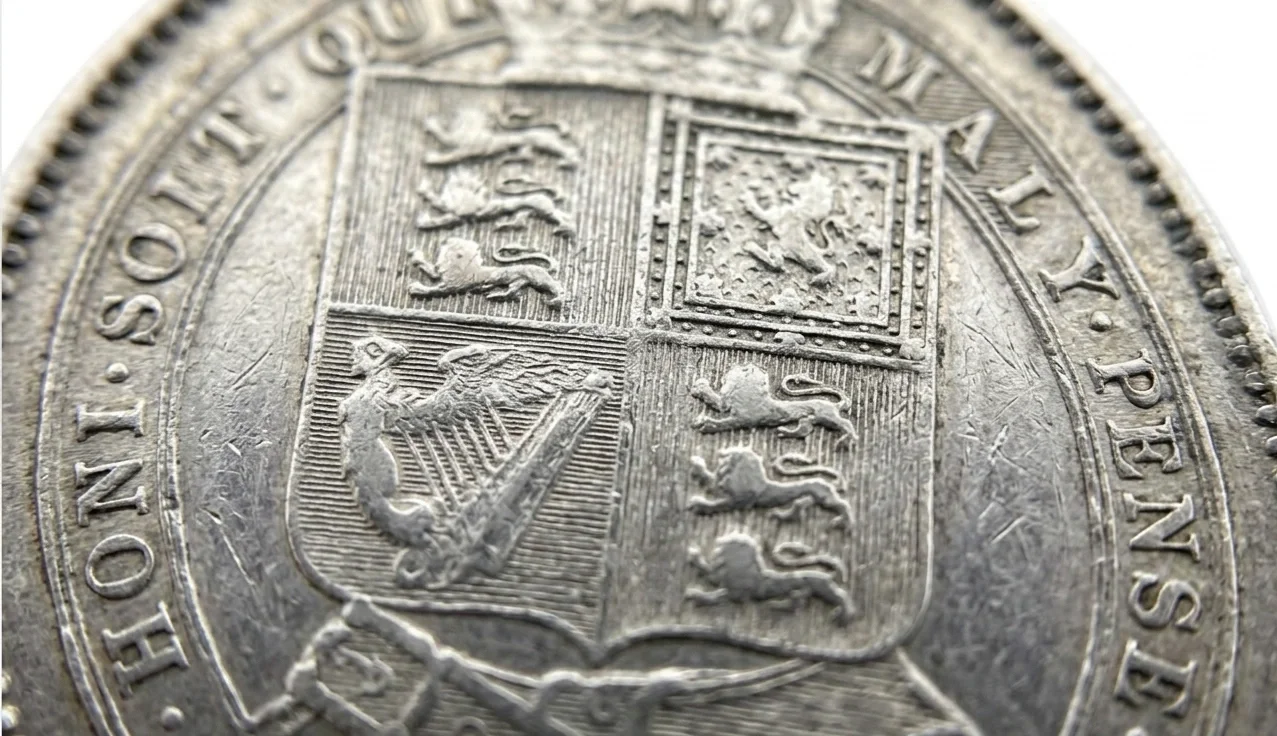
UK shillings require a close look at the monarch's hair and the shield details on the back.
Checklist for Quality:
Sharp shield lines → total lack of smoothing in MS state.
Protected luster (around letters) → proof that no cleaning occurred.
Edge integrity → zero nicks or dents from drops.
Finding signs of polishing drops the grade to a "Details" level.
Prices for "Details" coins are 60% lower than items with a clean, numeric grade.
Silver Spot Prices and Scrap Value
Silver shillings in 2026 have a price floor set by their raw metal weight.
Investors often buy worn coins as a protective financial asset.
Calculating Silver Value (1816–1919): Pure Silver Mass → 5.23 grams. Formula → 5.23 * current silver gram price.
For 1920–1946 runs, the pure silver mass is 2.83 grams.
Buying silver shillings in G or VG state is only logical when the price is near the bullion rate.
Risks of Chemical Cleaning
Markets in 2026 react poorly to any signs of artificial interference.
Stripping the patina from 92.5% silver ruins the coin's historical integrity.
Cleaning Damage:
Hairline scratches from abrasives.
Unnatural mirror-like shine.
Surface turning a dull grey color over time.
Dealers use the free coin value checker app to spot traces of cleaning fluids.
Any note or coin subjected to harsh cleaning loses its status as an investment object.
Mintage Figures as a Value Anchor
Production volume for a specific year is the most objective rarity factor.
UK Mintage Stats:
1905 Year → 488,000 units → MS Price: $1,200.
1946 Year → 32,000,000 units → MS Price: $15.
A 65x difference in supply creates a massive gap in final market value.
Mintage data is provided by the Royal Mint and is open for public verification.
Checking these numbers before buying prevents overpaying for common dates.